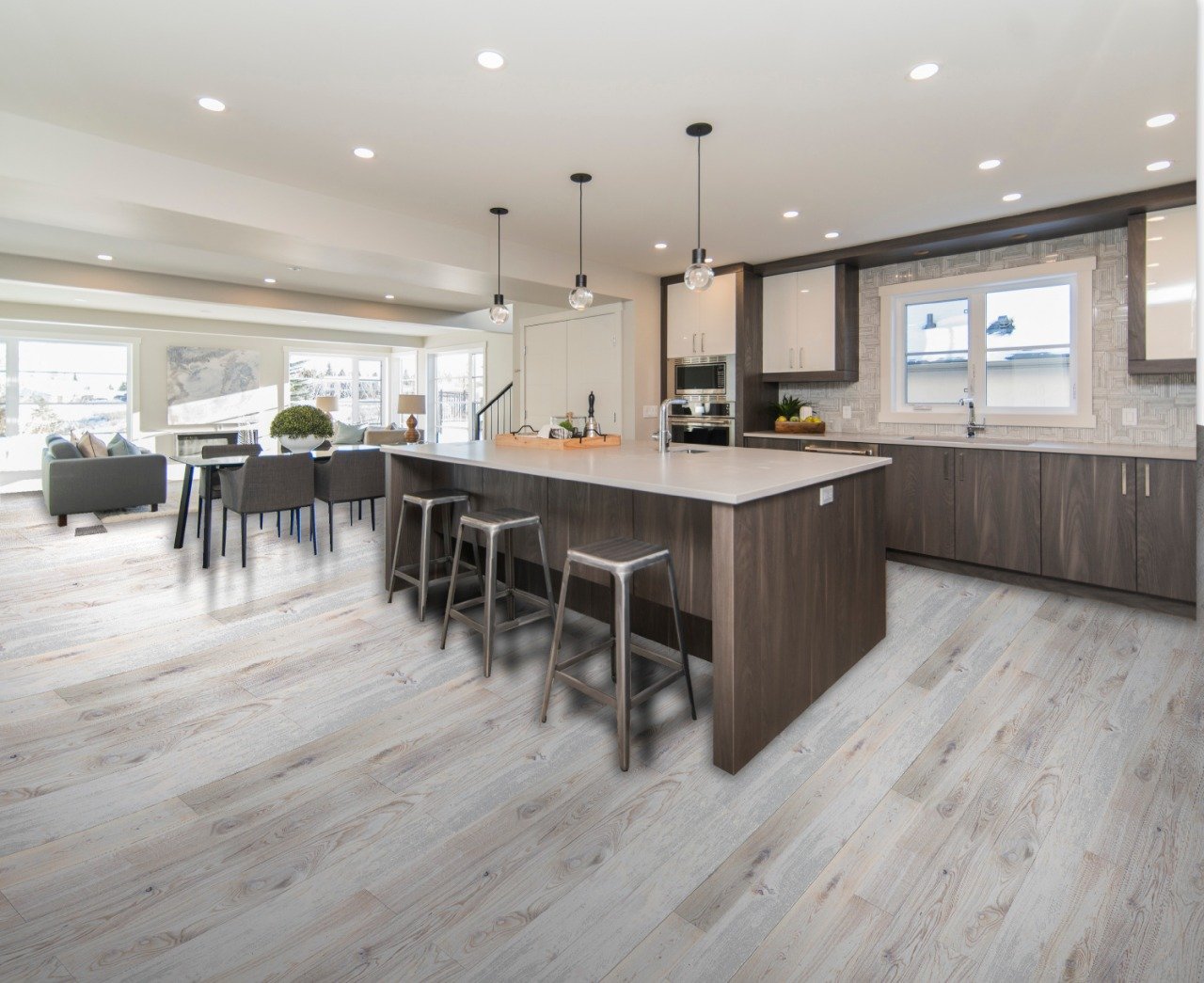
Why we recommend engineered hardwood floors?

News

Why we recommend engineered hardwood floors?

1. Construction

Solid hardwood boards are milled from a thick piece of lumber, so its thickness varies from ¾-inch to 7/16-inch. Engineered boards, on the other hand, are constructed by joining multiple high-density fiberboard layers sandwiched inside a solid wood top layer and hardwood backing, making it extremely tough.

2. Expansion and contraction

The distinct construction of engineered wood forms a rigid structure that does not gap, buckle, or respond to fluctuations in temperature and humidity. Solid wood fluctuates a lot, and is mostly used for ground level rooms and above, while engineered wood can be installed on any level, including below ground.

3. Durability

Engineered floors are constructed in such a way that they have enhanced stability and slightly more resistance to daily wear and tear and buckling, though both have an extremely durable coating capable of withstanding harsh treatment.

4. Stability

Engineered wood is dimensionally more stable compared to solid wood floors.

5. Maintenance

The hardwood floors become more appealing as they age, though the surface tends to dull and develop scratches and scuffs over time. Solid wood can be sanded and refinished multiple times depending on its thickness, while engineered boards only need refinishing once or twice over the floor’s life.

6. Cost

Solid hardwood is more expensive than engineered floor with regard to method of installation, labor, and cost of material.

7. Resistance to moisture

Compared to solid hardwood, engineered wood floors have superior resistance to slightly lower and higher moisture levels, which makes them more ideal for use in damp basements or regions with higher or lower than standard humidity levels.

8. Going green

Choosing engineered floors over solid wood helps to conserve expensively priced timber. For every 1 square foot of ¾ inch thick solid wood floor, you can manufacture around 4 times that amount into engineered wood flooring.

Despite the differences, any hardwood flooring is a great option, especially since it does not cause allergies, and it increases the value of your home by 2-5%.
CHOOSING THE BEST WOOD FLOOR FOR YOU.

News

CHOOSING THE BEST WOOD FLOOR FOR YOU.

TheRightFloor have been manufacturing and selling hardwood floors for over 25 years. TheRightFloor philosophy: we will only supply products which we are confident are properly suited to the task for which they are specified. And that’s the important point. We stock around 50 different engineered wood flooring products in our warehouses and can order hundreds more, but should we order more? After 25 years in business, we know all the wood species, manufacturing and construction processes. And we hand picked the best combination of quality and price to sell TheRightFloor to you. All our floors are excellent, but the question you should be asking is not a question of which floor is the best but of which one is best for you.


All our engineered flooring boards are produced from European oak. It is similar to American white oak but darker in tone with a finer grain and growth rings, and it exhibits more even coloring. It is a heavy and relatively more expensive timber, but very strong, hard, tough and durable. European Oak is simply better quality than American Oak, so please keep in mind that not all oaks are the same and ask for European Oak when you shop around.


In our product specifications you will find references to the grade – prime, select, classic, character, natural and rustic – and the finish – lacquered, oiled, et cetera. None are better than the others (you can find out more about grades and finishes here), like color they are simply a matter of taste and preference. So browse our boards to see which you find the most appealing.

.

Humidity and Hardwood Flooring.

News

Humidity and Hardwood Flooring.

No matter how well seasoned, oiled, waxed or lacquered it may be, wood remains hygroscopic. So when humidity is high it will absorb some of that moisture, swell and rise or ‘crown’ in the middle. When that same piece is placed in a dry environment – as happens when using heating or air conditioning – it will release its moisture, dry out and shrink. Lay pieces side by side in a confined space and these changes in humidity can result in them bowing, warping, cupping or gaping over time. This is what can happen with traditional solid hardwood flooring.


Engineered hardwood floors consist of more than one layer. The top layer is solid wood, the other layers may be plywood, softwood or more layers of hardwood. Each layer is bonded to the next with the grain running at right angles. This makes it virtually impossible for the board to swell or shrink, meaning that when it is laid it is highly unlikely to warp and gap, or otherwise suffer in the same way as solid hardwood flooring.


The top layer of solid wood, otherwise known as the wear layer or veneer, may be anything from 2mm to 6mm. The thicker this top layer, the more times it may be sanded and refinished to remove any signs of wear. TheRightFloor only manufactures and sells engineered floors with at least 3.5mm wear layer and a number of floors with 6mm (almost 1/4″ thick) wear layer. A 6mm wear layer is similar to the depth above the tongue in a traditional, solid tongue and groove plank, meaning that it will wear just as well. Win-win for an engineered hardwood floors!


Selecting the right hardwood floor color is a challenging task.

News

Selecting the right hardwood floor color is a challenging task.

Selecting the right hardwood floor color is challenging because it impacts the overall look, feel, and practicality of your space. Here are some key challenges that make choosing the right color difficult:

1. Room Size and Light

  • Natural Light: The amount and type of light a room receives can change how a floor color appears. Darker floors tend to absorb light, making a room feel smaller or cozier, while lighter floors reflect light, brightening the space. You need to consider how the color will look at different times of the day.
  • Room Size: Darker floors can make small rooms feel even smaller, while lighter colors can make a small room feel more open. However, a larger room can handle darker tones without feeling cramped.

2. Matching with Existing Décor

  • Furniture and Fixtures: The hardwood floor color needs to complement your existing furniture, cabinetry, countertops, and wall colors. If you choose a floor color that clashes with these elements, it can make the room feel disjointed or overwhelming.
  • Design Style: Different wood floor colors suit various design aesthetics. Light floors are often used in modern, Scandinavian, or minimalist designs, while darker floors tend to fit better in traditional, rustic, or formal settings. Striking the right balance between your design preference and what works for your space is tricky.

3. Long-Term Trends vs. Timelessness

  • Trendy Colors: It can be tempting to go with trendy colors like gray or whitewashed tones, but trends change over time. Opting for a timeless color might ensure that your floors stay in style longer. The challenge is balancing your personal taste with long-term appeal, especially if you plan to sell your home.
  • Future Renovations: Your hardwood color should also blend well with any future changes in décor. Picking a neutral tone is often safer, but it might feel less exciting if you’re drawn to bolder, more distinctive colors.

4. Impact on Cleanliness and Maintenance

  • Visibility of Dirt and Dust: Dark hardwood floors show dust, pet hair, and scratches more clearly than lighter colors. On the other hand, lighter floors tend to show dirt, mud, and scuff marks more easily. You need to consider how much maintenance you’re willing to take on to keep the floor looking clean.
  • Wear and Tear: High-traffic areas, especially in homes with children or pets, will show signs of wear and scratches more easily on certain floor colors. Medium-toned floors often hide wear better than very light or very dark floors.

5. Personal Preference vs. Practicality

  • You might love the look of a dark espresso floor, but if you have a busy household, lighter tones might be more practical for hiding wear and mess. Similarly, while lighter floors can create an airy feel, they may not fit well with every lifestyle or aesthetic.

6. Wood Species and Grain Patterns

  • Some wood species take stains differently, and the natural grain of the wood can affect how the color looks. For example, oak might take stain more evenly, while a species like hickory has a more varied grain that can cause color to appear inconsistent.

7. Sampling and Final Appearance

  • The small samples you see in stores or at home often don’t fully capture how the color will look across an entire floor. Lighting, wall color, and other environmental factors can drastically change the appearance. Deciding from a small sample is risky because it might not reflect how the floor will look in your space on a larger scale.

8. Resale Value Considerations

  • If you’re thinking about the future resale value of your home, you may want to choose a neutral, widely appealing color. However, balancing what appeals to potential buyers with your own style preferences can be difficult.

9. Tone Variations

  • Hardwood floors often have natural tone variations, even within the same species and stain. This means that even if you pick a particular color, the installed floor may have some planks lighter or darker than others. This natural variation can either add character or be seen as a drawback, depending on personal taste.

Choosing a hardwood floor color requires balancing aesthetic preferences with practical considerations, making it a tough but important decision.